Introduction
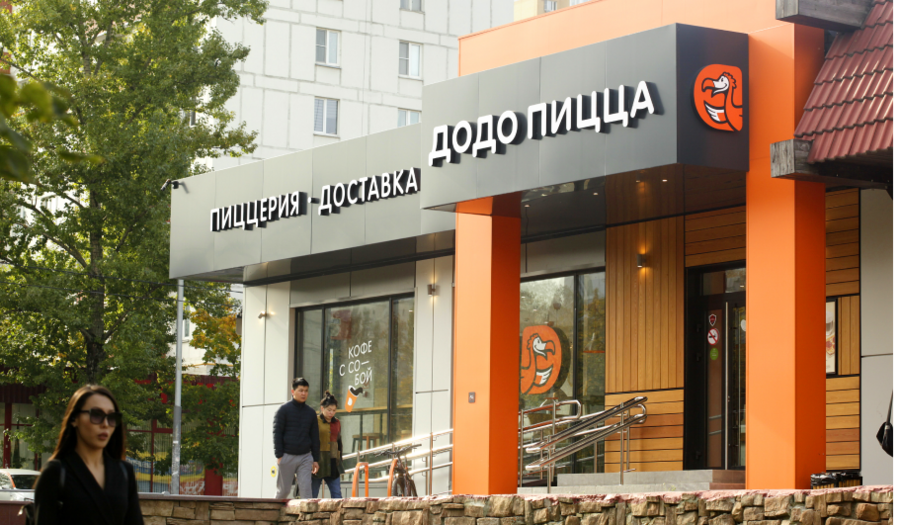
Photo of Dodo pizza restaurant
Dodo Pizza is an international pizza chain founded in Russia in 2011 by entrepreneur Fyodor Ovchinnikov in Syktyvkar. From a single pizzeria, Dodo Pizza has grown into one of the largest pizza franchise networks in Eastern Europe. As of 2026, the brand operates locations across more than 15 countries.
What makes Dodo Pizza distinctive in fast-food industry is the philosophy underlying the business. The brand’s core positioning rests on four central pillars: quality, transparency, technology, and a sense of belonging.
Dodo Pizza’s brand personality is warm, playful, and approachable. The company communicates with its customers in a casual, often humorous tone, avoiding the corporate stiffness.
Dodo Pizza’s primary target audience is young urban customers between the ages of approximately 16 and 35, predominantly millennials and Gen Z consumers. These individuals are digitally active, value convenience and speed, appreciate authenticity in brand communication and expect brands to communicate with them in a language that feels genuine rather than scripted.
Communication Channels
Dodo Pizza employs a multi-layered communication strategy across both digital and traditional channels. The brand’s public presence is built on consistent messaging, creative campaigns, and active community engagement. Below is an overview of the key channels and PR strategies the brand uses to connect with its audiences.
Social Media Platforms:
VK: Dodo uses this platform to run large-scale campaigns as well as localized promotions for specific regions or cities.
Instagram*: Instagram is used primarily for visual content, high-quality food photography, short video reels, behind-the-scenes content.
Telegram: The brand uses Telegram channels for direct, real-time communication with customers announcing new promotions, providing updates on new menu items or store openings.
TikTok: Dodo uses TikTok to create short-form, often humorous or trend-driven video content targeting the youngest segment of its audience.
*- Meta Platforms Inc. (and its products Facebook & Instagram) is recognized as an extremist organization in the Russian Federation
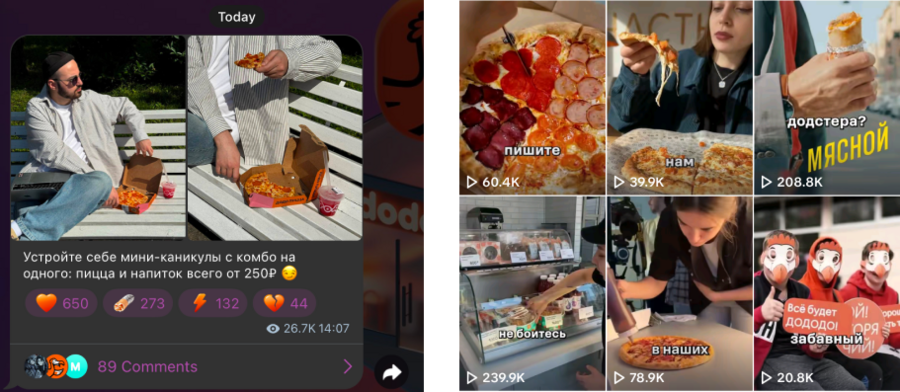
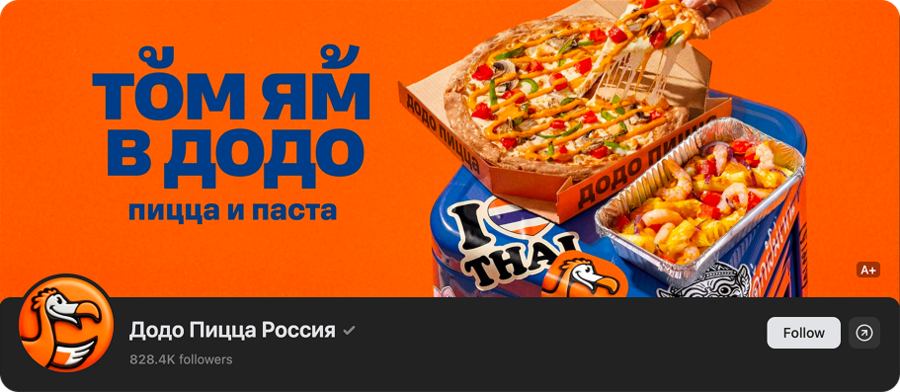
Screenshots of Dodo in VK, Telegram and Tiktok
PR Strategies:
Radical Transparency: Dodo Pizza has built a significant portion of its PR strategy around openness and honesty.
Combo Promotions and Discount Advertising: Dodo often uses promotional banners, both digital and physical, to advertise combo deals combining a pizza with a drink or something else.
Influencer Marketing: Dodo collaborates with food bloggers, lifestyle influencers, and local content creators to extend organic reach and build social proof among their target demographics.
Campaign-Driven Content Marketing: Beyond standard product promotion, Dodo consistently produces content that engages audiences on a cultural or emotional level.
Mobile App and Digital Loyalty Program: Dodo Pizza maintains a mobile app and website that allow customers to order directly, earn loyalty points, and access exclusive digital promotions.
Theoretical Framework: Theory of Planned Behavior
The Theory of Planned Behavior was developed as an extension of the earlier Theory of Reasoned Action by Martin Fishbein and Icek Ajzen. Its core assumption is the rationality of human action, people do not act spontaneously, but according to their behavioral intention a conscious plan to act in a certain way. The theory identifies three components that together shape this intention and ultimately produce behavior.
Attitude Toward the Behavior: The individual’s attitude toward the behavior — their overall positive or negative evaluation of performing that specific action.
Subjective Norm: The perceived social pressure to engage in or refrain from the behavior. Subjective norms are shaped by normative beliefs, the individual’s beliefs about what important reference groups (friends, family, colleagues, society at large) expect them to do.
Perceived Behavioral Control: an individual’s sense of whether they are actually capable of performing the behavior. This includes control beliefs, the presence or absence of factors that might help or hinder the action. Even when attitude and social norms are favorable, a person may not act if they feel they lack the ability, knowledge, or access to do so.
Together, these three factors produce the behavioral intention, and a strong intention combined with high perceived control leads to actual behavior. Importantly, the theory also acknowledges background factors that shape how these components develop, at the individual level — personality, values, mood, and education, at the social level — the norms of someones community; and at the informational level — the knowledge and media exposure a person has access to. This makes theory directly applicable to brand communication: advertising can deliberately target behavioral beliefs, normative beliefs, or perceived control.
Theoretical Framework: Dialogic Theory
Dialogic Theory, developed by Kent and Taylor, explains how organizations should ethically build quality relationships with their publics through genuine dialogue. Unlike one-way information broadcasting, dialogic communication is defined as a negotiated exchange of ideas and opinions built on honesty, truth, and positive regard for the other. The theory proposes five core features that define true dialogue:
- Mutuality: recognition that organizations and publics are inextricably tied together and must collaborate.
- Propinquity: communication must happen in the present, before decisions are made, not as an afterthought.
- Empathy: dialogue requires a supportive atmosphere where people feel encouraged to participate. Organizations must invite feedback and create conditions where even critical voices feel welcome.
- Risk: genuine dialogue is always a risk, because it is spontaneous and unrehearsed. Organizations must be open to unanticipated responses and accept that the other party may hold a fundamentally different view.
- Commitment: the organization must be genuinely devoted to understanding the other, not just going through the motions of communication. The goal is mutual benefit, and this requires honesty and a real willingness to let dialogue shape decisions.
But when applied to online and digital communication specifically, Dialogic Theory is evaluated through five practical principles:
- The dialogic loop: websites and platforms must allow publics to ask questions and receive real responses.
- Usefulness of information: content must offer genuine value to all types of visitors, not just potential customers.
- Generation of return visits: platforms should give audiences a reason to come back through fresh, dynamic content.
- Intuitiveness: interfaces must be easy to navigate so that engagement is not blocked by usability barriers.
- Conservation of visitors: the communication environment should hold the audience’s attention within the brand’s own space, rather than redirecting them elsewhere.
For Dodo Pizza, these two theories work in combination: Theory of Planned Bahavior reveals how the brand’s campaigns engineer consumer beliefs and intentions, while Dialogic Theory assesses whether the brand genuinely communicates with its audiences or simply broadcasts at them.
The Theory of Planned Behavior
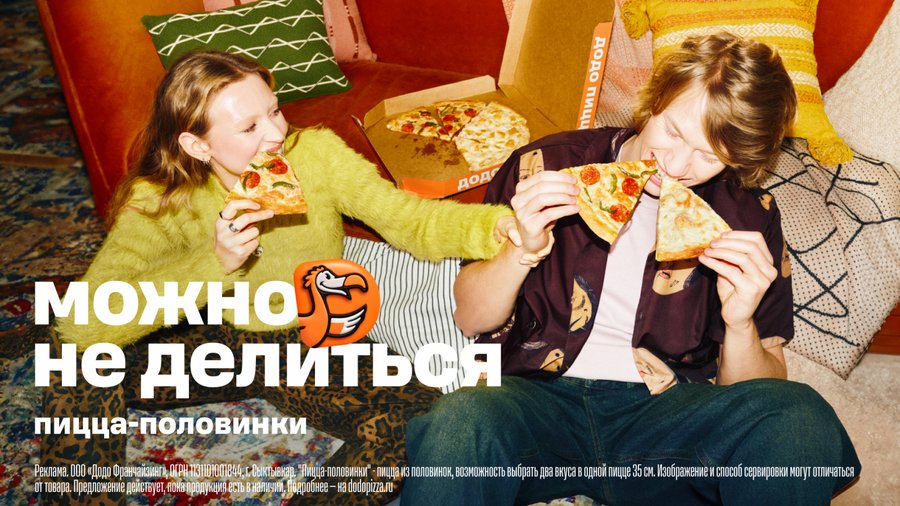
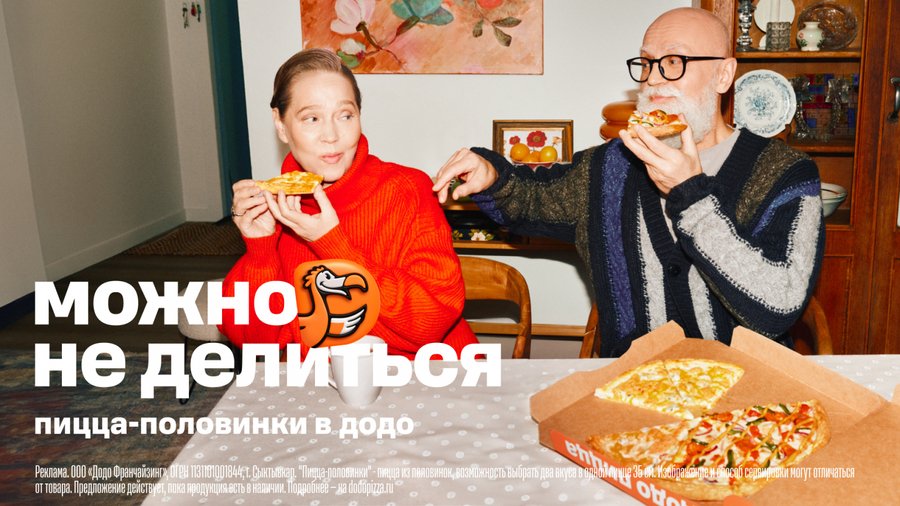
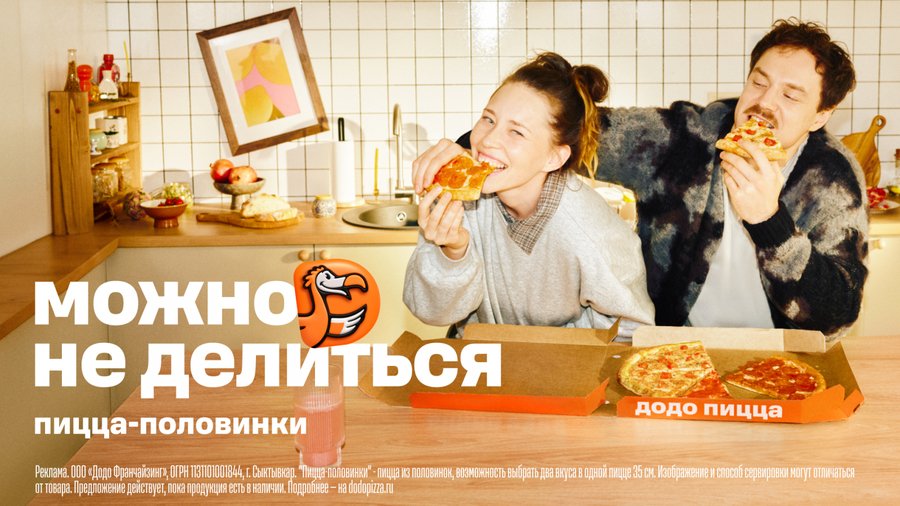
Dodo Pizza advertising posters
Dodo actively uses the Theory of Planned Behavior in its advertising campaigns. The brand successfully plays with both behavioral beliefs and normative ones. Using the slogan «you don’t have to share» («можно не делиться») the campaign works with the exact opposite of a long-established social norm. Everyone is taught from childhood that it is necessary to share, because generosity is a virtue, and greed is a vice. But Dodo advertises pizza made from halves and says that we don’t have to share our half, because the other person has his own, and everyone chooses the taste they want.
Dodo Pizza advertising poster
The slogan «dodo of the last piece» («додо последнего кусочка»), on the one hand, says that pizza is so delicious that not a single piece remains, and on the other hand, refers us to the normative belief, which has also been embedded in many since childhood, «you can not leave food on your plate, you need to finish everything.» When a person eats pizza, his behavior is likely to be influenced by this normative belief, further reinforced by advertising, because the more evidence we see of the belief, the more often we follow it.
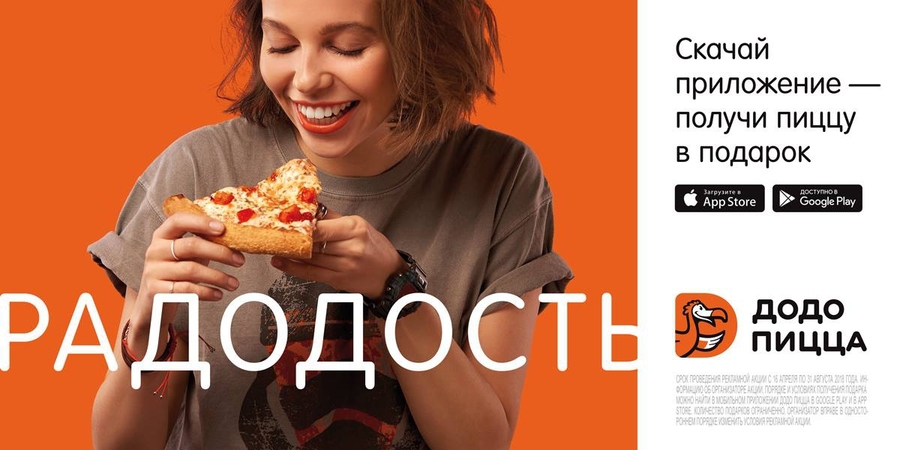
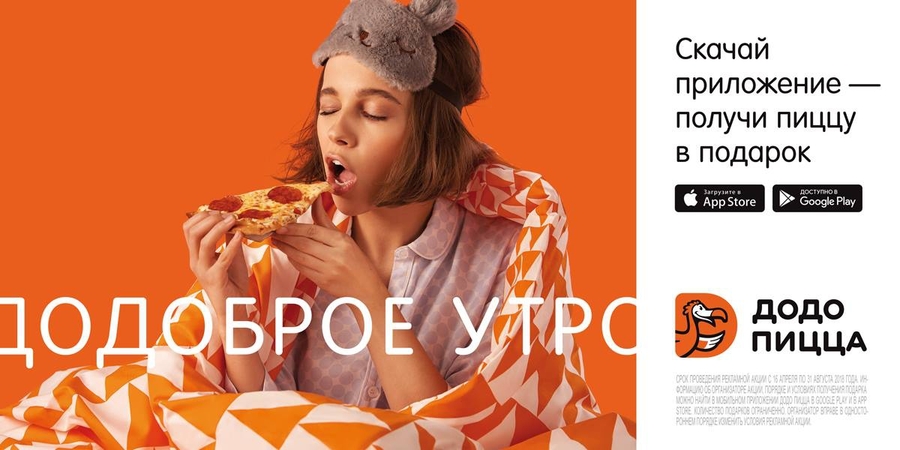

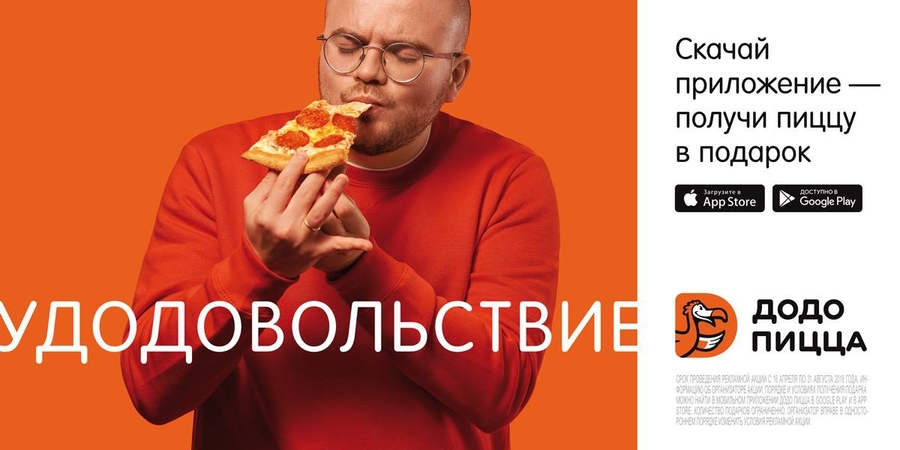
Dodo Pizza advertising posters
The slogan «Dodogood Morning» («Додоброе утро») works with both normative and behavioral beliefs. Eating pizza for breakfast was not accepted in our society. Porridge, eggs, and other nutritious foods were more often associated with breakfast. But the advertising campaign seems to give permission, shows that you can eat pizza for breakfast, that people do this, and it’s not criticized. On the other hand, many people have a negative attitude towards pizza for breakfast, perceiving pizza as a festive, rather than an everyday dish. In this case, advertising interacts with behavioral beliefs, questioning a person’s habitual attitude to pizza in the morning.
The advertising banners «DodoGladness» («Радодость») and «DodoPleasure» («Удодовольствие») are made according to the same principle. They seem to allow you to experience positive feelings from eating pizza and make it the norm.

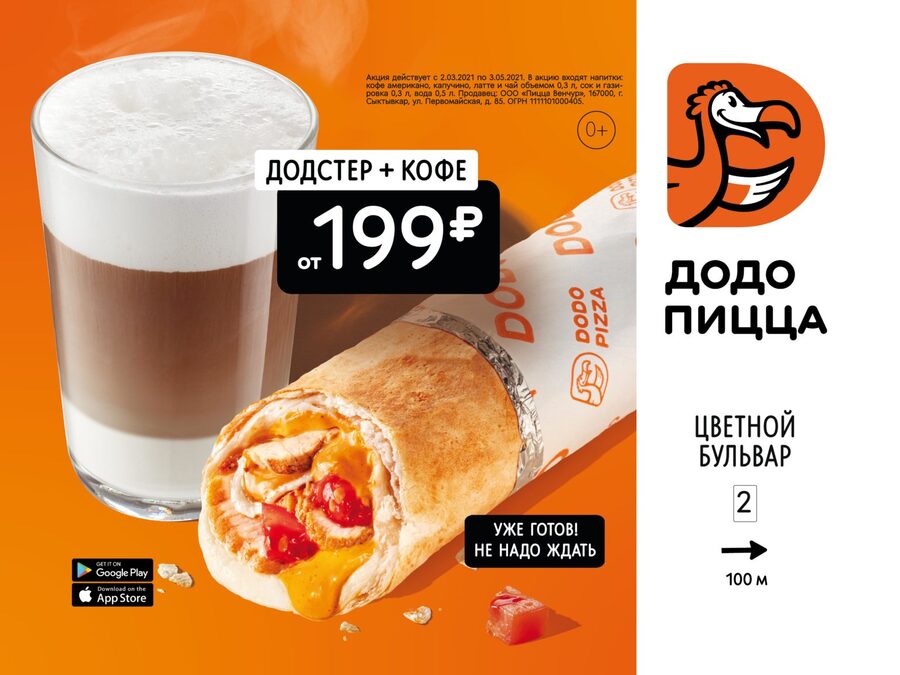
Dodo Pizza advertising posters
Dodo has a lot of advertising banners that offer to take a combo of a product and a drink. In this case, understanding a person’s intention to drink after a meal works, and here the brand’s task is to retain the customer and not allow him to buy a drink elsewhere, but to buy everything at the Dodo. They do this with the help of promotions and combo discounts, which are fixed in the memory of customers and lead to additional sales.

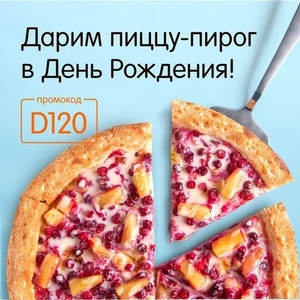
Dodo Pizza advertising posters
The «giving pizza on your birthday» («дарим пиццу в день рождения») campaign is also linked to the behavioral belief about pizza as a festive dish that everyone loves and that is convenient for celebrating. With this action, Dodo reminds of pizza as the perfect birthday dish and attracts birthday people to himself.
Pizza advertising for large companies works on a similar principle. But we’ve already gotten so used to the pizza meeting format that it’s gone from a simple behavioral belief to a normative belief. When you first ask what you want to eat, many people choose pizza.
The Dialogic Theory
Screenshots from the Dodo Pizza app
Dodo Pizza’s communication clearly shows the principle of the dialogic loop: the audience can not only leave feedback or ask a question through customer support, but also quickly receive a valuable response from the company.
This principle is also described in the brand book. There is a separate section called «The Principle of Zero Unanswered Messages.» In it, the company says that every piece of direct feedback is shown on special screens, that it does not replace people with bots that make solving problems much more complicated, and that it actively looks for feedback on maps, review platforms, social media, and always responds to everyone. The brand book also states that 70% of issues are resolved during the first conversation. This shows a very strong level of involvement and commitment to dialogue.
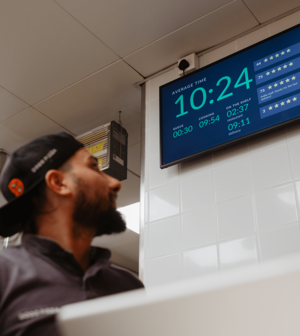

Photo Dodo Pizza
Moreover, the company’s «Principles of Care» suggest that a response to a customer should not be just an apology. Dodo describes customer support as a tool for «high-quality communication with customers and the search for systematic solutions.» It is especially important that a complaint becomes a reason for investigation and process improvement. For example, the cases with an oven mitt in a pizza box, a nut in a pizza, slippery stairs, and problematic cheese are described as examples of how a customer complaint can lead to operational change.
We can see this on RuStore. On the review page, there are dated comment threads: on June 6, 2026, a user complained about SMS codes and the inconvenience of the app, and on June 11, the developer replied with a list of diagnostic steps and gave a channel for continuing the dialogue. On May 30, 2026, a user criticized the automatic launch of a video with sound, and on May 31, they received a reply saying, «We understand that this may be inconvenient, ” along with a promise to think about improvements. On May 31, 2026, a strongly negative comment about the taste of the food received a detailed reply on June 5 about the quality of the ingredients, as well as a request to send order details so that the company could „become better.“
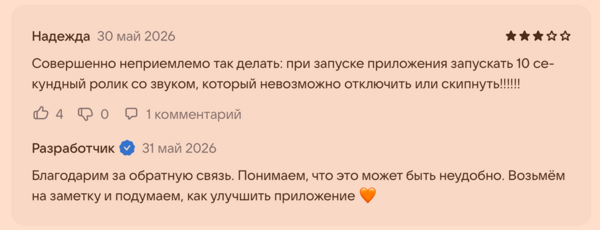
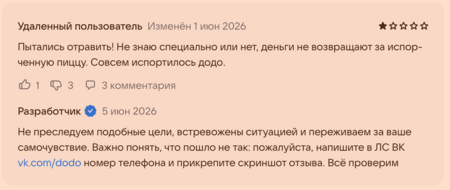
Screenshot from the RuStore app of Dodo Pizza